




The quest and legal battle for mineral resources intensifies as Cameroon prepares to challenge a residual compensation claim following a major arbitration ruling in its dispute with Australian mining group Sundance.

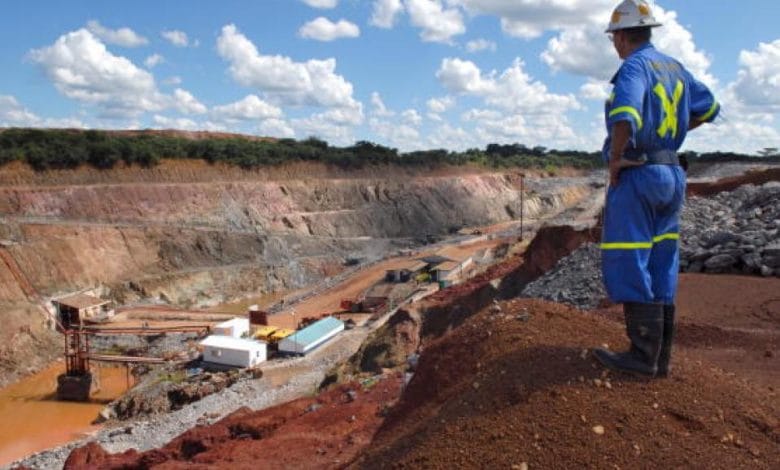
Resources over the Mbalam in Cameroon is preparing for a new legal battle in Paris after an International Chamber of Commerce (ICC) arbitral tribunal rejected more than 90 per cent of a nearly 3,000 billion CFA franc claim brought by Sundance Resources and its local subsidiary, Cam Iron, over the Mbalam iron ore project.
The tribunal’s final award, dated 20 July 2026 and notified to the parties on 23 July, reportedly set aside more than 2,750 billion CFA francs of the claim.
A residual amount, believed by sources close to the case to be below 250 billion CFA francs, remains.
Cameroon, however, is not prepared to pay even that amount and is expected to challenge the remaining compensation before the Paris Court of Appeal.
Tribunal rejects lost-profit claim
The award brings to a close five years of arbitration proceedings between Cameroon and the Australian mining group over the Mbalam iron ore project.
One of the most significant aspects of the decision is the unanimous rejection of Sundance’s claim for lost future profits calculated using the discounted cash flow (DCF) method.
The tribunal refused to compensate projected profits from a mine that was never financed, constructed or brought into operation.
Where liability was retained, it was reportedly linked to the Transition Agreement signed on 30 June 2015, which entered into force on 7 July 2015.
The surviving compensation therefore relates primarily to past costs rather than projected profits from future mining operations.
Why Cameroon is challenging the remaining claim
The residual compensation is now expected to come under intense legal scrutiny.
A dissenting opinion attached to the award reportedly identified several weaknesses in the majority’s assessment of damages.
The first concerns the timing of the costs awarded.
The majority is said to have compensated costs incurred from 2006 onwards, despite the Transition Agreement forming the basis of liability entering into force only in 2015.
The dissenting arbitrator reportedly questioned whether such an approach amounted to a retroactive calculation of damages.
The second issue concerns the tribunal’s mandate.
The arbitrators were expected to decide the dispute according to law and were not granted the powers of an amiable compositeur — a status that would have allowed them to decide on the basis of fairness and equity.
The dissent therefore questions whether the damages calculation amounted to an equitable estimate rather than a loss established through legal proof.
The third issue is causation.
The causal link between the breaches retained by the tribunal and the costs awarded is reportedly questioned, with the dissent arguing that the connection may have been asserted rather than sufficiently demonstrated.
The central question for Cameroon is therefore whether the compensation awarded exceeds the loss directly linked to the breaches actually established.
These issues could become central to the annulment proceedings before the Paris Court of Appeal.
Under Article 1520 of the French Code of Civil Procedure, the court may examine, among other matters, whether an arbitral tribunal acted within the limits of its mandate and whether the award complies with international public policy.
The residual claim is therefore expected to face a rigorous legal challenge in Paris.
The shadow of the Congo award
The Cameroon case is also closely linked to separate arbitration proceedings involving the Republic of Congo.
In an award dated 17 December 2025 in ICC Case No. 6145, an arbitral tribunal dismissed in full an eight-billion-dollar claim brought by Sundance Resources against Congo over the Congolese side of the Mbalam-Nabeba project.
Costs were also awarded against the claimant.
The decision was later admitted into the Cameroon proceedings after the case was reopened on 5 February 2026.
One of the issues reportedly considered was the risk of double compensation for a single project across two sovereign states.
Taken together, the two awards have significantly weakened Sundance’s overall claims.
Of the enormous sums demanded from Cameroon and Congo, the overwhelming majority has now been rejected.
Cameroon heads to Paris
Cameroon has indicated that it will launch annulment proceedings, with the ultimate objective of ensuring that no compensation is paid.
The dispute, which began with the ambitious mining plans surrounding Mbalam and later moved through arbitration proceedings involving Yaoundé and Brazzaville, is now heading to Paris.
For resource-rich states, the case carries a broader lesson.
A mining concession or a commercial claim does not automatically amount to a guaranteed asset.
The Mbalam dispute also highlights the difficulty of securing massive compensation for projects that were never financed, constructed or brought into operation.
For now, the legal battle continues — from the Mbalam-Nabeba project, through Yaoundé and Brazzaville, and ultimately to Paris.
And for Cameroon, the objective is clear:
Zero compensation.
Philips Enchi
About Author