



After nearly 15 years of delays and a legal claim of almost $5 billion, Cameroon has won a major arbitration victory over the Mbalam iron ore project, with more than 90 per cent of the claims rejected and the remaining award now set for a fresh legal challe.
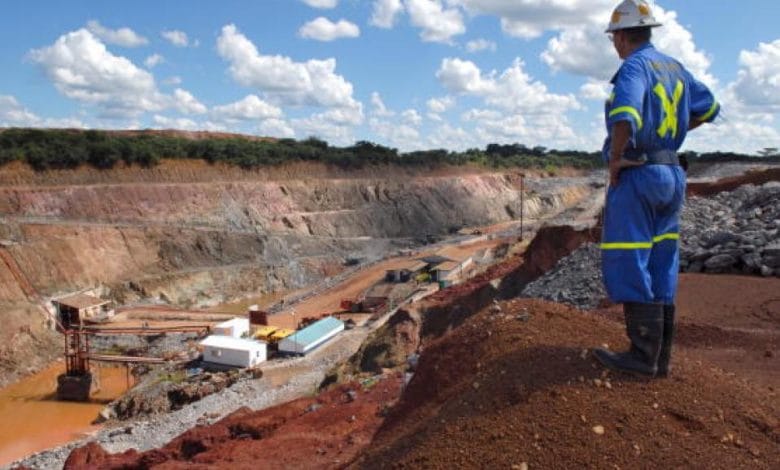
Cameroon’s long-running legal battle over the Mbalam iron ore deposit has entered a new phase after an international arbitration tribunal rejected the bulk of a multi-billion-dollar claim brought by Sundance Resources and its local subsidiary, Cam Iron. The final award, dated 20 July 2026 and notified to the parties on 23 July, dismissed more than nine-tenths of the claims brought against the State. The claim for lost profits, based on the discounted cash flow method, was rejected unanimously by the three-member tribunal. The decision significantly reduces a claim initially estimated at nearly 3,000 billion CFA francs, or approximately $5 billion.According to sources close to the proceedings, the remaining amount is below 250 billion CFA francs, representing costs incurred in the past.But even this residual award is being challenged. One member of the tribunal issued a dissenting opinion, questioning the majority’s assessment of damages. The dissent reportedly raises concerns over the compensation of costs dating back to 2006, despite the Transition Agreement forming the basis of liability entering into force only in July 2015. The opinion also questions whether the link between the alleged losses and Cameroon’s actions was sufficiently established.A project that never took offThe dispute has its origins in the ambitious Mbalam iron ore project in Cameroon’s South Region. Under a 2012 convention between the State and Cam Iron, the local subsidiary of Australian mining company Sundance Resources, the project was expected to include an open-pit mine, a railway of nearly 500 kilometres and a mineral terminal on the coast near Kribi. The project was expected to transform Cameroon’s mining sector and generate significant economic activity.But the promised development never materialised. Financing was not secured. No railway was built. No mineral terminal was constructed. And no iron ore was extracted from the deposit.In 2015, Cameroon signed a Transition Agreement with its partner, giving the project another opportunity to move forward. The agreement entered into force on 7 July 2015. However, the project remained stalled. From failed project to billion-dollar claimAfter Cameroon took steps to reclaim control of the resource, Sundance Resources and Cam Iron initiated arbitration proceedings before the International Chamber of Commerce.The companies claimed nearly 3,000 billion CFA francs from the State, including compensation for profits expected from a mine that had never begun production.

The arbitration proceedings, registered as ICC Case No. 26291, lasted five years. The tribunal has now rejected the largest part of the claim. The decision also comes against the backdrop of a similar legal battle involving the same project in the Republic of Congo. In December 2025, the Republic of Congo secured the dismissal of an eight-billion-dollar claim brought by Sundance over the Congolese side of the Mbalam-Nabeba project. Costs were also awarded against the company. That decision was introduced into the Cameroon proceedings in February 2026 after the tribunal reopened the case, partly over concerns about the possibility of the same project being compensated twice in two different countries. Cameroon heads to ParisCameroon is now expected to challenge the remaining award before the Paris Court of Appeal. The State’s position is clear: no payment should be made.The annulment proceedings will focus on whether the tribunal properly established liability and damages, whether it remained within the limits of its mandate and whether the award complies with applicable principles of international public policy.
For Cameroon, the Mbalam dispute is about more than a legal claim.It is also about the right of a sovereign state to control and develop its natural resources when promised investments fail to materialise.After nearly 15 years of delays, the Mbalam iron ore deposit remains largely untouched. But following the latest arbitration decision, Cameroon says the resource and the decision over its future must return to the State. The mountain is still there. This time, Cameroon wants to decide what happens to it.
About Author